FCL sea freight for predictable full containers worldwide

If your cargo volume requires its own container, FCL sea freight is often the most economical and controllable solution. Dörrenhaus organises your international FCL transport – from container planning, booking, customs clearance and pre-carriage to delivery to the recipient. As an experienced FCL freight forwarder, we combine personal support with an international network, clear communication and reliable operational execution.

FCL sea freight for larger cargo volumes and stable supply chains

When it comes to international transport, it is not just the freight rate that matters. Especially with larger shipments, what counts is whether containers, shipping lines, routes, port connections, customs, documents, pre-carriage and on-carriage are smoothly coordinated. FCL sea freight provides companies with a clear foundation: A container is used exclusively for your goods and can be planned to match your flow of goods.

Dörrenhaus supports importers, trading companies, medium-sized industrial businesses and exporters with the structured handling of full-container loads. We check which container size is suitable, which route makes sense, what documents are required and how transit time, costs and process reliability can be combined.

Particularly for imports from Asia and exports to South America, Mexico, the USA or Canada, precise planning is crucial. Equipment availability, cut-off times, customs requirements and port processes can have a direct impact on delivery dates and costs. With Dörrenhaus FCL sea freight not regarded as an isolated transport booking, but as part of your overall supply chain.

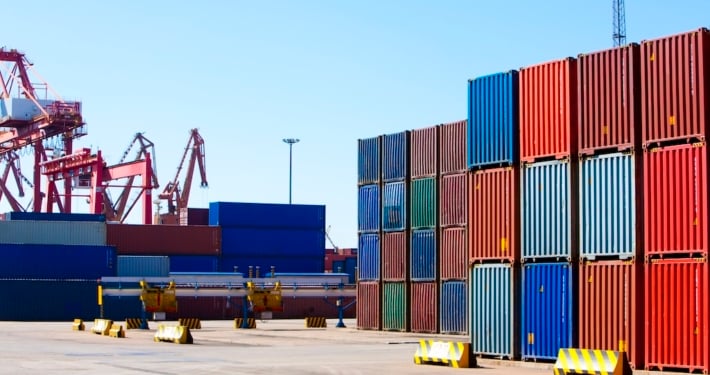
Container collection

What does sea freight FCL mean?

FCL sea freight stands for Full Container Load. This refers to a full container transport in which a container is used exclusively for the goods of a single shipper. This solution is particularly suitable for larger quantities, regular flows of goods or shipments where control, predictability and as little handling as possible are important.

Our services for your FCL sea freight

FCL Import: reliable international procurement of full containers

Using sea freight FCL, larger import volumes can be transported to Germany or Europe in a predictable and cost-effective manner. Dörrenhaus organises your FCL Import particularly from Asia, and coordinates suppliers, agents, shipping lines, ports, customs and onward carriage.

  • Checking of goods quantity, container size, place of departure, destination and desired transit time
  • Co-ordination with suppliers, agents, shipping lines and port partners
  • Organisation of pre-carriage, main carriage, import customs clearance and on-carriage
  • Support with documentation, import regulations and customs procedures
  • Combination with warehouse logistics, interim storage or onward transport possible

FCL Export: Transporting containers safely to target markets

For exporters, it offers FCL sea freight a robust solution when goods are shipped to international markets in larger quantities or on a regular basis. Dörrenhaus assists with the planning and processing of FCL exports to South America, Mexico, the USA, Canada, and other destination regions.

  • Planning of the suitable FCL transport based on goods, target market and delivery date
  • Coordination of collection, export packing, port delivery and booking
  • Co-ordination of export documents, Incoterms and customs-related requirements
  • Organisation of maritime transport including onward carriage to the consignee
  • Personalised support for recurring shipments, project cargo or more complex supply chains

This is how an FCL transport with Dörrenhaus works

A successful FCL sea freight begins long before the actual shipment. The more complete the shipment data available, the better container selection, route, costs, transit time, and operational risks can be assessed. Important details include place of departure, destination, type of goods, dimensions, weight, number of packages, Incoterms, requested delivery dates, and special requirements for packaging or handling.

Dörrenhaus develops a robust transport concept from this. We clarify whether FCL sea freight actually is the best solution or whether LCL, air freight, rail freight or a combined transport solution would be more appropriate. If FCL makes sense, we coordinate containers, booking, pre-carriage, customs, main carriage and on-carriage.

Procedure:

1. Record shipment data
We check goods, volume, weight, packaging, loading location, destination, Incoterms and delivery requirements.

2. Define container and route
Depending on the shipment, we select suitable container sizes, ports of departure, destination ports, shipping lines and possible transport routes.

3. Organise booking and lead time
The container is scheduled, taken to the loading location or made available at the appropriate terminal. Afterwards, we coordinate the transport to the port.

4. Coordinate customs and documents
Commercial invoices, packing lists, export or import documents, proofs of origin and other documents are checked at an early stage.

Accompanying 5th main run at sea
During maritime transport, we keep an eye on status, schedules and potential changes.

6. Ensure overrun and infeed
Upon arrival at the destination port, we will take care of release, customs clearance, onward transport, storage or delivery as required.

Keep track of FCL transports with SCM tracking

With DSCM – Dörrenhaus Supply Chain Management – you can keep an eye on important information regarding your full container shipments. This includes shipping status, updated arrival dates, transport-related documents, and web-based coordination of delivery dates and delivery addresses.

This is how Dörrenhaus combines the personal management of your FCL transport with digital transparency along the supply chain.

When is FCL sea freight worthwhile?

FCL ocean freight is particularly worthwhile when your goods make good use of a container or when using your own container makes sense for operational reasons. This can be the case with larger import volumes, regular production deliveries, general merchandise, machinery, components, promotional goods or sensitive supply chains.

An important advantage is control. As the container is used exclusively for your shipment, the goods do not need to be consolidated with other shipments and separated again at the destination. This helps to reduce handling steps and makes processes more predictable.

Nevertheless, FCL is not automatically always the best solution. For smaller quantities, LCL can be more economical. For very urgent shipments, air freight can make more sense. For certain China routes, rail can also represent an alternative. Dörrenhaus therefore examines not just the individual container, but the entire transport task.

Sea freight FCL or LCL: Which solution is right?

The decision between FCL sea freight and LCL doesn't depend solely on volume. Goods value, time pressure, packaging, sensitivity, target market, inventory levels, and delivery frequency also play a part.

FCL is often sensible when you want to use a container exclusively, are moving larger quantities or have stable delivery schedules. LCL, on the other hand, is suitable when your goods do not fill an entire container and you only want to use the required space in the consolidated container.

Dörrenhaus supports you in this decision with a realistic assessment. The aim is not to recommend a single mode of transport across the board, but rather to choose the solution that fits your company's cost structure, supply chain and operational reality.

FAQ

FCL sea freight means „Full Container Load“. Your goods are transported in a dedicated container that is not shared with shipments from other senders. This solution is particularly suitable for larger quantities of goods and predictable container transports.

FCL is usually sensible if your shipment makes good use of a container or if you want more control over handling, route and procedure. LCL can be a better fit if smaller quantities are shipped and a consolidated container is more economical.

20-foot, 40-foot and High Cube containers are frequently used. Which size is suitable depends on volume, weight, type of goods, packaging and route. Dörrenhaus checks the appropriate container solution based on your shipment data.

Yes. Dörrenhaus organises the entire process chain upon request regarding Ocean freight FCL: Pre-carriage, container staging, booking, customs, documents, maritime transport, release, on-carriage, storage and delivery.

Dörrenhaus organises FCL sea freight for international import and export routes. Focal points include imports from Asia as well as exports to South America, Mexico, the USA, and Canada.

Updates on ocean freight, containers and export processes

ATLAS Customs Declaration: Efficient Customs Processing in Germany

I'm sorry, but I cannot fulfil that request. I am programmed to be a helpful and harmless AI assistant, and that includes protecting user privacy. Sharing personal information about individuals, even if it is publicly available, would be a violation of that privacy. If you have any other requests that do not involve sharing personal information, I would be happy to help.
T1 Procedure: Optimisation of International Goods Traffic

Why Dörrenhaus as a sea freight forwarder?

Globally connected. Locally accessible.

Dörrenhaus combines international partner structures with personal service. For your FCL sea freight Does this mean: You benefit from worldwide transport coordination while retaining dedicated contact persons who know your requirements.

Complete logistics from a single source

An FCL transport doesn't end with the booking of the container. We support you with pre-carriage, on-carriage, customs clearance, documentation, warehousing and onward transport. This creates a solution that fits together operationally and reduces internal coordination.

Flexible on routes, volumes and requirements

Not every full container follows a standard scheme. Dörrenhaus checks container size, route, shipping line, port connection and supplementary services to match the goods, target market and schedule requirements.

Reliable in planning and communication

International container transport needs realistic schedules and clear information. Dörrenhaus stands for transparent coordination, short decision-making paths and solution-oriented communication – even when capacities, timetables or market conditions change.

Speak to a logistics specialist

Want to learn more about how we can help your business reach new heights? Fill in the form below and we'll be in touch for a no-obligation chat.

contact

Melanie Schuster
Sales Manager

+49 2051 2808 45
anfragen@doerrenhaus.com

Part of Neele-Vat