
Cargo Transport

Cargo transport with the highest level of efficiency

Originally from the Spanish sailor language and later adopted by the English and German languages, “cargo” refers to freight, i.e. a load of goods to be transported. While in the past it was mainly sea transport that fell under the category of cargo transport, the term is now used in a more general sense and ranges from street cargo by truck to air cargo by air freight.

As an experienced and internationally networked freight forwarding company, Dörrenhaus GmbH handles your cargo transport with the highest level of efficiency and reliability. From tailor-made advice on the right type of cargo transport to timely order processing and the necessary follow-up, Dörrenhaus scores with a careful and conscientious way of working. Comprehensive insurance coverage as well as excellent international communication and organization are a matter of course for us. In this way, we are able to handle freight transport without complications, meet even short-term delivery deadlines and minimize the risk of damage and loss of goods.
Why Dörrenhaus?

Because we keep our promises!
  • We have been arranging sea transport since 1998.
  • We offer our LCL and FCL service at over 450 international ports.
  • We offer transparency in the CIF and FOB costs incurred.
  • You don't have to worry about a thing!

The optimal cargo solution for every requirement profile

Cargo transport is possible in a wide variety of options, from full loads to partial loads and groupage shipments. While full loads utilize an entire transport unit with the freight, partial loads only take up part of the transport volume. The latter option scores with maximum flexibility, but in most cases requires a longer transport time.

Last but not least, the distinction between general cargo and groupage is an important factor when planning and carrying out cargo transport. While general cargo can be transported individually, when carrying groupage cargo, individual goods must be combined into one piece. During our initial consultation, we will work together to find out which mode of transport is best suited to your requirements profile.

From trucks to air cargo – means of transport in comparison

Depending on the requirement profile, urgency, type of goods and budget, cargo transport can take place using a wide variety of transport modes. Finished products, but also semi-finished products and raw materials are transported precisely to the desired destination on a wide variety of transport routes using a wide variety of means of transport. If the cargo transport takes place inland, street cargo transport via truck or rail transport is an adequate solution. With low emissions, this variant protects the environment and also offers a competitive compromise between short transport times, a certain degree of flexibility and good conditions. The Piggy Back Service, a combined transport variant of container train and truck, represents the highest level of sustainability and cost efficiency.

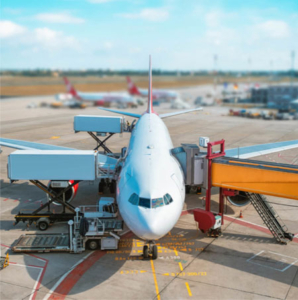
The premium variant in the area of cargo transport is Air Cargo or Air Freight, which takes place by air and transports freight particularly efficiently to its destination. The highest level of safety, impressively short transport times and the ability to reach even remote destinations easily and quickly characterize cargo transport by air freight. These advantages also make air cargo a costly option, especially compared to sea freight, which is why costs and benefits must always be weighed up when planning cargo transport.

Economical and efficient – cargo transport by sea

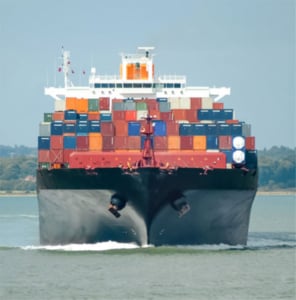
Whether by freight ship, inland ship or coastal ship - sea transport, known as cargo shipping, is the oldest variant of cargo transport and is particularly popular thanks to its cost efficiency. On a large scale, goods of all kinds are transported from A to B on the great waterways of the oceans. But cargo ships also travel inland on a smaller scale by transporting cargo on wide rivers.

Depending on the transport destination and the general circumstances, we differentiate between ocean shipping and coastal shipping in the area of cargo shipping. While goods are transported near the coast using ships with a relatively high capacity but shallow draft, international sea transport uses particularly large and robust ships.

With regard to cargo transport, coastal shipping has the advantage of being able to access smaller sea and inland ports. International cargo transport via ocean freighter or container ship, on the other hand, enables larger quantities of goods to be shipped and easy reloading at the destination port.

Although cargo shipping by sea is not the fastest of all transport methods, it is particularly cost-effective. Non-perishable and bulky goods can be transported safely and smoothly to the destination using sea freight, and our network of ports also covers destinations that are difficult to reach by land.

Combined transport

Particularly exciting in this context is the multimodal Ro-Ro service, which combines street cargo transport with cargo shipping by sea. The transport vehicles used can be driven directly from the road onto the transport ship. The interaction of both transport modes combines the positive aspects of cargo transport by sea and land. Since there is no need to load goods from one means of transport to the other, you benefit from gentle cargo handling, simplified organization and minimization of the risk of loading damage and mix-ups. If you have any detailed questions or are interested, please feel free to contact one of our competent contact persons at any time. We look forward to your inquiry.